
What Is a Stock Perp?
A stock perpetual is a perpetual futures contract whose reference price tracks a single equity (NVDA, TSLA, AAPL, MSFT) or an equity index (S&P 500, Nasdaq-100).
The contract lives on Hyperliquid's onchain order book, settles in a stablecoin such as USDC, and never expires.
Instead of an expiry, hourly funding payments keep the perp price anchored to the underlying via an oracle feed. You can go long or short, with leverage set per market.
What you are trading is price exposure.
There is no share, no dividend, no voting right, and no ownership. That is the defining feature, and the most important thing to understand before you open a position.
Stock Perps vs Tokenized Stocks: Don't Confuse Them
These two products both give you exposure to a stock's price and are otherwise completely different:
A tokenized stock is backed 1:1 by a real custodied share. It is spot ownership, with no leverage and no liquidation.
A stock perp is a leveraged synthetic contract that only references the price. Nothing is backed. It has funding costs and can be liquidated.
If you want to hold equity exposure, that is a tokenized stock. If you want to trade a stock's price direction with leverage, that is a stock perp. For the wider category, see tokenized assets explained.
Which Stock Perps Can You Trade on Hyperliquid?
Hyperliquid enables these markets through HIP-3, a permissionless framework where independent builders deploy new perpetual markets that settle on Hyperliquid's shared order book.
The dominant equity-perp builder as of 2026 is TradeXYZ (built by the Hyperunit team), which accounts for the large majority of HIP-3 open interest, alongside others such as Felix.
Available markets have included:
Single-stock perps: Nvidia (NVDA), Tesla (TSLA), Apple (AAPL), Microsoft (MSFT), Google (GOOGL), Amazon (AMZN)
Index perps: a synthetic Nasdaq-style index (XYZ100) and the first officially licensed S&P 500 perpetual, under agreement with S&P Dow Jones Indices
Pre-IPO perps: contracts giving exposure to companies before they go public
Leverage is set per market by the builder. As of mid-2026, single-stock perps have capped around 10x to 20x and index perps up to 30x, but these change; confirm the live cap on each market page before trading.
Why Trade Stock Perps Onchain?
24/7 markets. Traditional stock markets close. Stock perps do not. When news breaks overnight or on a weekend, you can position immediately.
Long or short with leverage. Take either direction with capital efficiency, without a margin account at a broker.
Self-custody. Funds stay in a wallet you control; there is no deposit into a broker's account.
Onchain transparency. Every position and liquidation is public, which, as covered below, is a genuine edge.
The trade-offs are equally real: leverage means liquidation risk, funding is an ongoing cost, oracle quality varies by builder, and synthetic equity exposure sits in an evolving regulatory landscape whose availability differs by jurisdiction.
Understand the rules that apply to you.
How to Trade Stock Perps with Smart Money Data
Stock perps settle onchain, which means the same intelligence layer that works for crypto perps works here.
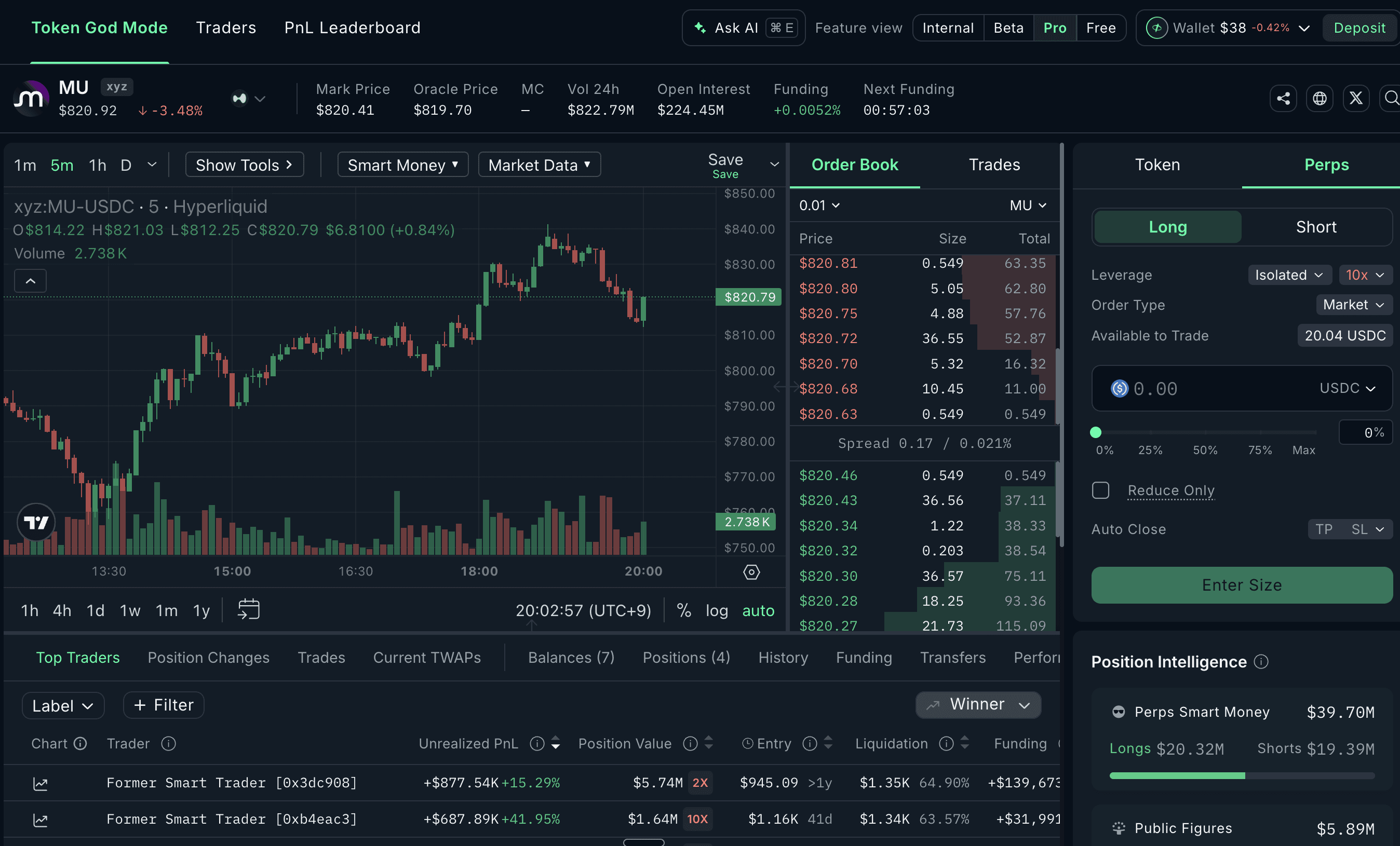
With Nansen, you can see how wallets are positioned in a stock perp before you enter: whether Smart Money, wallets with verified track records across 500M+ labeled addresses, is net long or short, how open interest is trending, and where funding sits.
A traditional brokerage shows you a chart.
Onchain, you can see who is actually positioned.
The workflow is the same one covered step by step in how to trade Hyperliquid perps with Smart Money data: find the cluster, check funding and open interest, then act.
New to perps mechanics entirely? Start with the beginner's guide to perpetual futures on Hyperliquid.
Curious why experienced traders concentrate here? See why Smart Money prefers Hyperliquid.
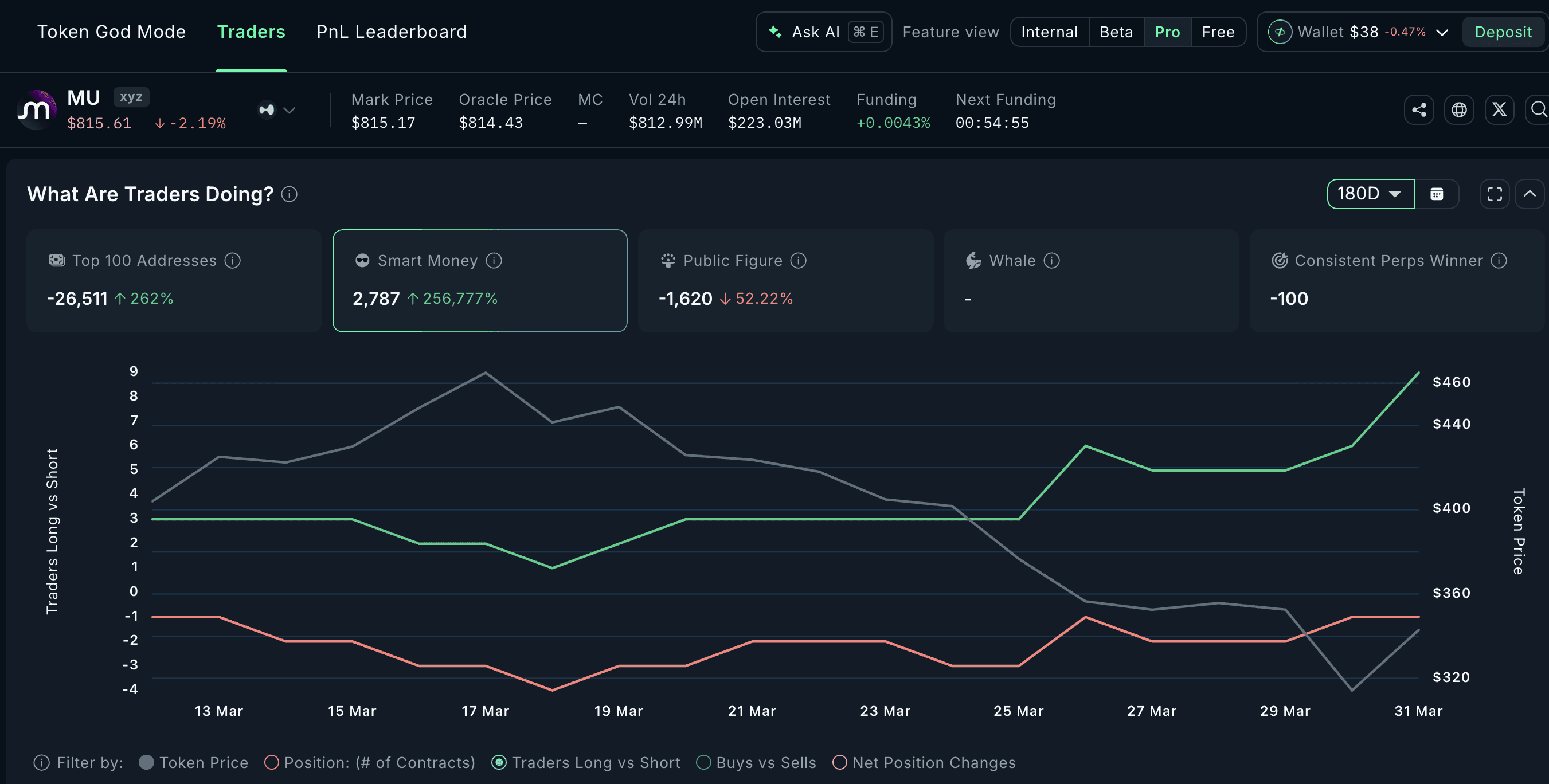
Risk Management for Stock Perps
Everything from crypto perps applies, plus a few equity-specific points:
Know your liquidation price before entering. Leverage cuts both ways.
Watch funding. Elevated funding erodes a held position over time.
Mind the weekend gap. The underlying stock stops trading; the perp does not. Price can move sharply when traditional markets reopen.
Check the builder's oracle. HIP-3 markets depend on the deployer's price feed quality. Stick to the most liquid, established markets while learning.
Confirm jurisdiction. Availability of synthetic equity products varies. Verify what you can legally access.
FAQ: Stock Perps on Hyperliquid
What are stock perps? Perpetual futures contracts that track a stock or equity index price, traded onchain with leverage and no expiry. Hourly funding keeps the perp anchored to the underlying.
Do I own the stock when I trade a stock perp? No. A stock perp is a leveraged synthetic contract that only references the price. There is no share, dividend, or voting right. To own equity exposure, you would use a tokenized stock instead.
Which stocks can I trade as perps on Hyperliquid? Via HIP-3 builders, markets have included NVDA, TSLA, AAPL, MSFT, GOOGL, and AMZN, plus index perps for the Nasdaq-100 and S&P 500. The list changes; check the live venue.
How much leverage can I use? It varies by market and builder, historically around 10x to 20x on single stocks and up to 30x on indices. Confirm the current cap on each market before trading.
How is a stock perp settled? In a stablecoin such as USDC, onchain, with hourly funding rather than an expiry date.
Can I see how other traders are positioned in stock perps? Yes. Positioning is public onchain. Nansen surfaces it against labeled wallets, so you can see whether Smart Money is long or short before you trade.
Conclusion
Stock perps put 24/7, leveraged, self-custodial exposure to equities like Nvidia and the S&P 500 onchain, through Hyperliquid's HIP-3 framework.
They are a powerful tool and a leveraged one: you are trading price, not owning shares, and liquidation is always on the table.
The onchain edge is the same as it is for crypto perps. The market's positioning, including its most consistently profitable wallets, is public.
Do your own research and read it before you trade.